Learning Disability Today
Blue Sky Offices Shoreham
25 Cecil Pashley Way
Shoreham-by-Sea
West Sussex
BN43 5FF
United Kingdom
T: 01273 434943
Contacts
Alison Bloomer
Managing Editor
[email protected]
[email protected]

All you see is not all there is about a person. It is vital to always explore beyond what is happening, enquire who the person is, and value them as fellow humans. This is what Stephen Unwin does in this excellent book, Beautiful Lives: How we got learning disabilities so wrong, which provokes the reader to examine themselves, humanity, and the worth of people with learning disabilities.
The book begins with a wonderfully powerful letter to the author’s son, Joey. A young man who has a great sense of humour, captivating smile and who enjoys nature and being with family and friends. He is also non-verbal with significant learning disabilities. This letter sets Stephen off on his journey, highlighting how people with a learning disability do have beautiful lives, but it is society, ideas, and practice that get this so wrong.
I refer to you in the book from time to time, imagining you in the places and situations that I describe and, sometimes, share what it feels like to be your dad. But my real subject is bigger than you, bigger than both of us. It’s the way that people with learning disabilities – some of whom are a bit like you; some of whom really aren’t – have been understood and misunderstood, revered and despised throughout history.
He ends the letter by saying that writing it down will help the reader understand why people like Joey are so valuable, not just to him, but to all of us.
Throughout the book, the focus is on the exclusion and dehumanisation of people who have learning disabilities. From ancient Rome through to eugenics, Nazi Germany and the present, Stephen eloquently traverses the landscape, always focusing on and challenging how people with a learning disability are perceived, as well as the values and worth society affords them.
The value society places on intellect is challenged here. Instead, he says the focus must be on people as they are and the value they add to families and communities.
This overvaluing of intellect is harmfully overemphasised in society and regularly results in dehumanising people with learning disabilities. It has led to the othering that is still prevalent today. We see this in how services are set up, in the austerity measures over the past decade or so, and in the debates around assisted dying and benefit reductions.
This book is an essential, thought-provoking, wonderful tour through time to the present day that should be widely read by health, education and care professionals, as well as all policymakers and lawmakers. It would be an excellent tool for the education and training of all professionals.
 The key takeaway messages for me are that everybody’s life has worth; everyone adds value, and the othering of people with a learning disability dehumanises our collective self. Focus, as set out very clearly by Stephen, should be on a person’s humanity and the rights that must be afforded to them, which they so frequently are not.
Finally, the joy that Joey and many, many others like him with learning disabilities bring to their families, communities, and society at large is an essential element of humanity that transcends spoken language, the written word, and perceived intelligence.
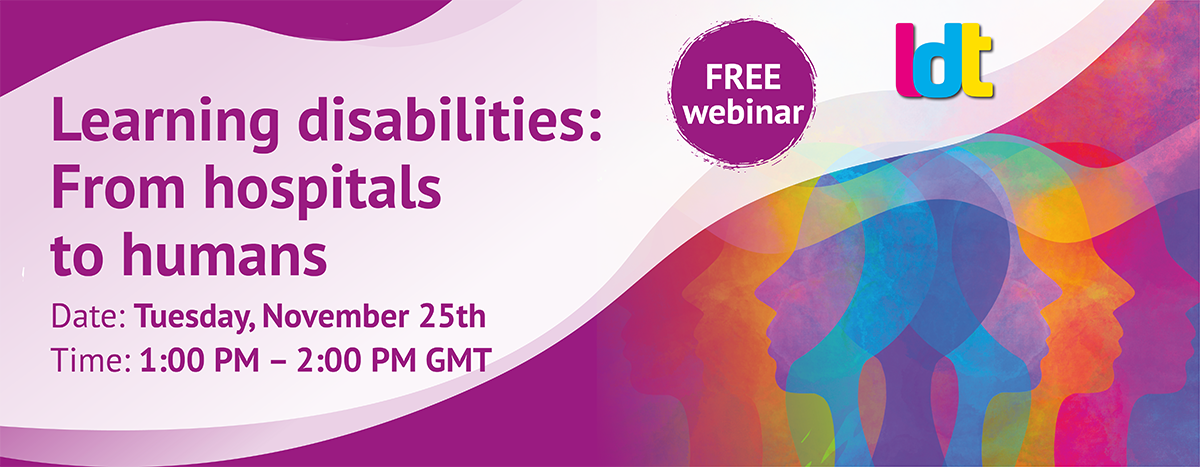
Join Jim Blair and Stephen Unwin on Tuesday, November 25th, at 1 pm for a free webinar as they discuss the themes raised in this book.