Learning Disability Today
Blue Sky Offices Shoreham
25 Cecil Pashley Way
Shoreham-by-Sea
West Sussex
BN43 5FF
United Kingdom
T: 01273 434943
Contacts
Alison Bloomer
Managing Editor
[email protected]
[email protected]

Disabled children and their families are facing trauma from the very public services designed to support them, according to a new report from Cerebra.
The report, ‘Systems Generated Trauma: How disabled children and their families are traumatised by dysfunctional public services when they ask for support’, is based on evidence from over 1,200 families and reveals that the experience of fighting these systems is leaving the most vulnerable families exhausted, isolated, and in profound distress.
Systems Generated Trauma (SGT) is defined as severe harm caused by hostile, relentlessly bureaucratic, and combative policies that families are forced to navigate when seeking basic support. Some families claim the trauma is often more distressing than other significant traumatic events, such as domestic violence or mental health difficulties.
The research challenges the current narrative by shifting focus from family resilience to institutional failure. It adds that harm caused to families is extensive, affecting their physical and mental health, causing significant financial hardship, disrupting education, and damaging family relationships. Shockingly, some parents reported that the relentless pressure had led to suicidal thoughts.
Cerebra CEO Jess Camburn Rahmani said, “There are moments in our work that stop us in our tracks. This report is one of them. It is a painful truth that many disabled children and their families are being traumatised—not by illness, not by accident, but by the very public services that are meant to be their lifeline. This is not a fringe issue. It is not rare. It is not acceptable. It is happening every day, in every corner of our society, and it is breaking people.”
“Having a disabled child is not the traumatic part. The trauma is seeking (or trying to seek) support from education, health and social care services. The past ten years of negotiating with these public services have completely and utterly changed me as a person”.
“My son, once a joyful young man, now lives in a near-constant state of hypervigilance. The impact has left him emotionally distant, unable to trust, and a shadow of the vibrant person he once was”.
“The way, as parents we were judged, irrelevantly questioned and made to feel like I was the problem, has left me with mental health scars to this day”
“We are not the same people. We are broken and traumatised. We cannot trust anyone anymore”.
Cerebra is now demanding that SGT is formally recognised and public services acknowledge that their current systems cause trauma. It also wants research prioritised so that policymakers, funders, and academic institutions commit to further research to understand the scale and impact of SGT and to develop evidence-based solutions that actively prevent harm.
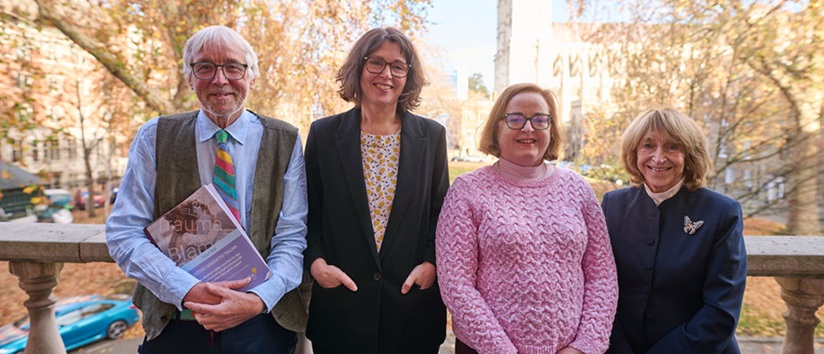
Professor Luke Clements, the report’s co-author and Emeritus Professor of Law and Social Justice at the University of Leeds, added: “There is a profound lack of accountability in terms of public bodies being held to account for the harm caused by their defective administrative systems.
“Although the trauma created by public sector systems was unintended, the failure of governments and other public bodies to take purposeful remedial action when the system defects are identified, renders untenable any assertion of blamelessness: in social harm theory, inaction of this kind is best described as ‘moral indifference’.”



