Learning Disability Today
Blue Sky Offices Shoreham
25 Cecil Pashley Way
Shoreham-by-Sea
West Sussex
BN43 5FF
United Kingdom
T: 01273 434943
Contacts
Alison Bloomer
Managing Editor
[email protected]
[email protected]

When theatre director and author Stephen Unwin adapted Sara Ryan’s profoundly moving and heartbreaking memoir for the stage last year, it offered a powerful portrait of the political indifference often faced by people with learning disabilities and the establishment that repeatedly neglects them.
Met with critical acclaim, Laughing Boy told the story of Connor Sparrowhawk, an 18-year-old who died in a specialist unit in Oxford in 2013. Connor was found unconscious in the bath after an epileptic seizure, and an independent investigation concluded that if Connor had been adequately supervised, he would not have died.
A complex subject to address and do justice to, not just for Sara and her family, but also for all the other families whose loved ones have died preventable deaths in NHS care units since Connor died.
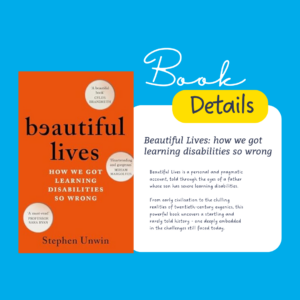
Now, Unwin has produced another ambitious work called Beautiful Lives: how we got learning disabilities so wrong, a compelling depiction of the inhumanity inflicted on people with learning disabilities throughout history.
In his introduction, he says that writing the book was hard. For much of history, people with learning disabilities have been seen as unworthy of interest, valuable only to their families, and sometimes even dismissed as barely human. But throughout the book, he asks how (and why) we’ve got learning disabilities so wrong and suggests what needs to change if there is to be a better future.
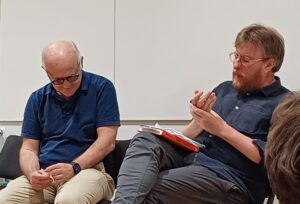
On the anniversary of Connor’s death at an event hosted by London South Bank University, he teamed up with Guardian columnist and Maybe I’m Amazed author John Harris to discuss the purpose of the book.
John Harris: Beautiful Lives is many things. It is a consummate work of scholarship. It is a political book. In a very elegant way, it is also a very personal book. There are not many books that are both shocking and inspiring, somehow simultaneously, and this book is both of those things.
My son has learning disabilities, and Beautiful Lives has helped me understand his life better within the context of history and how our lives sit in the present and future. The book also improved my understanding of your two plays, Laughing Boy and All Our Children. Was it your intention that these three works form a whole?
Stephen Unwin: I’m the dad of three fantastic children, and my youngest son, Joey, has what is described as profound or severe learning disabilities, and that has obviously been a hugely important aspect of my life. About 10 years ago, I began trying to write about Joey, and as I went along, I realised I didn’t really want to do that very much. Instead, I wanted to write about the history of the idea of learning disabilities. One important theme throughout the book is how people respond to those with learning disabilities. I was interested in how we got it so wrong that people with learning disabilities still live challenging lives today.
John Harris: How much of the history did you already know? It’s incredible to read this beautiful survey of the various issues connected to politics, power, institutions, government, and learning disabilities over the years. But many parts relate to literature and culture.
Stephen Unwin: The book is a history of culture, society, and politics. Much of the culture was probably already familiar to me, along with certain aspects of history and politics. I began writing the book just before lockdown. I emailed many people, including the brilliant Jan Walmsley (Professor of the History of Learning Disabilities at The Open University), who put me in touch with others. Gradually, I built a network of people I spoke to regularly on Zoom, and the reading list continued to grow. I spent the two years of the Covid pandemic researching and writing this. Part of it draws from personal experience, but I also did extensive reading and received help from many people, whom I acknowledge at the end.
People with learning disabilities have never harmed anybody and are the least likely to harm anybody. So, why don’t we embrace, celebrate and champion them?
John Harris: It’s a very harrowing read for parents, carers, friends, or relatives of someone with a learning disability, or for someone learning disabled themselves. Some parts are quite bracing and take you by surprise. For instance, I come from Frome, and at the train station, there’s a plaque honouring Virginia Woolf and her husband, Leonard. In the book, you discuss a 1915 diary entry from her, where she writes that she had to pass a “long line of imbeciles” and adds, “It was perfectly horrible…They should certainly be killed.”
This was written over 100 years ago by someone venerated as an intellectual writer. I’m not a big fan of cancel culture, but I think you might have a case here. What is it like to write about this kind of stuff and have to immerse yourself in it?
Stephen Unwin: I had two aims with the book. The first was to bring the reader very close to understanding the terrible nature of this history, as it is often forgotten and overlooked. I was very struck by the title of David Olusoga’s book Black and British: A Forgotten History. At one point, I discussed with the publisher the possibility of using the same subtitle.
The other was to say how unnecessary all that violence was because people with learning disabilities have never harmed anybody and are the least likely to harm anybody. So, why don’t we embrace, celebrate and champion them? I wanted to portray the joy, laughter, and love, and I was especially interested in how intellectuals – managers, politicians, superintendents, and those in charge – often had this as a blind spot.
John Harris: There is one bit in my book, Maybe I’m Amazed, about the history of autism education, and when I was writing it, I suddenly realised that 50 years ago, my son, James, who is an amazing person, like we all are, would have been in an institution in pyjamas all day.
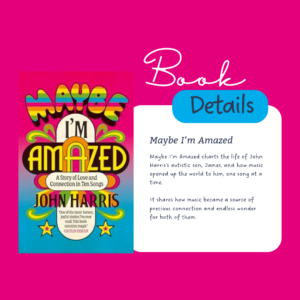 He would have been called ineducable. I found writing the three paragraphs about that profoundly difficult. Yet you have written about this whole terrible history.
Stephen Unwin: I see it as a work of history that you need to examine thoroughly and face up to it as a reality from the past. An interesting thing I’ve noticed is that, quite often, when I look at events that happened in history, there is often a positive energy, a sort of contradiction, present even though they led to a catastrophe. I’m not saying that the Nazi movement had any positivity about it at all, but some of the things closer to home contained both positives and negatives, and I’ve tried to capture both.
John Harris: The book has this revelatory quality, and I was surprised by the parts about the Greeks and Romans.
Stephen Unwin: It is nearly impossible to determine attitudes towards people with learning disabilities at that time for many reasons. One challenge in the study was identifying who was being referred to. Because they didn’t use the specific term for learning disabilities, it’s a more recent concept. There was this idea of ‘feeble-minded’, which was used in the early 19th and early 20th centuries, but it covered a wide range of people, including those with learning disabilities. So, when you read historical material mentioning ‘feeble-minded,’ it’s hard to tell exactly who they mean.
There was the notion that people with learning disabilities were menaces
John Harris: It seems to me, reading the book, there are sort of three or four periods, which, notwithstanding those complexities and contradictions that you just talked about, do have some structure to them. From what I gather, for example, if you had a baby who had some birth defects, very often in the Roman world, those babies were just thrown away.
Stephen Unwin: The first chapter in the book is called Sparta’s Fatal Chasm, which is supposedly the practice of abandoning disabled children into the wilderness to die. Scholars debate whether it happened or not, and I think most people believe it didn’t. However, Adolf Hitler said Sparta had the right idea. Therefore, it’s essential to recognise that it was an idea, one that had a lasting impact.
 We need to consider the broader historical context. The first section of the book, titled “Innocents,” discusses events up to the mid-19th century. There was the notion that when people with learning disabilities weren’t identified and put into a group, in some ways, they seemed to have had a better life. Simon Jarrett, a brilliant historian, shows that in Georgian England, there was a greater acceptance of people with learning disabilities.
Part of the problem began once they were identified as a group, and people thought something had to be done about this group, such as putting them into asylums and separating them from the rest of society. That is the road to hell. There was the notion that people with learning disabilities were menaces, and the second section of the book is called Menaces. So we go from innocence to menaces. There is a significant contradiction built into that, as this period of the Enlightenment, which in many ways was so important, was not beneficial for this group of people.
John Harris: The Georgian period is fascinating in the book because, as you said, it was full of contradictions. Jarrett says that people with learning disabilities “were members of families, of neighbourly and employment networks, and were loved, protected and accepted by those who knew them”. Then along comes the Industrial Age and the Enlightenment. Part of the story of this book is that post-modernisation led to the idea that everything can be classified, and there are objective standards of truth. Anything that falls on the wrong side of it needs to be removed. This is terrifying.
Stephen Unwin: I think this contradiction is evident throughout the entire book. I love science. It has saved my life and the lives of most people. It’s fantastic. And yet, there is a problem: if it doesn’t embrace or create space for vulnerability or weakness in humanity, it’s a disaster.
One thing I discuss in the book is that learning disabilities are universal. I don’t think my mum would mind me saying that my magnificent father, due to frailty, talks and reads a lot less these days. Learning disabilities affect us all. It’s human vulnerability, and it’s everywhere. The problem is that the very act of naming and diagnosing it involves its own violence.
I understand that a diagnosis is really important, especially a complex genetic one. But Joey remains undiagnosed. The idea that someone might eventually say he has a diagnosis doesn’t really matter. It won’t really make a difference. What matters is that he has had a decent life. I’m not criticising the desire to have a diagnosis, which I understand. But it’s not the whole story.
John Harris: Classification or diagnosis can be dangerous. That’s definitely what history teaches us. Why do you think the treatment of people with learning disabilities under the banner of eugenics was so terrible in America in particular, apart from Nazi Germany?
Stephen Unwin: Eugenics was founded in London. We only missed by a whisker in 1931, compulsory sterilisation of the feeble-minded in this country, because it was the Catholics and the socialists who opposed it in the House and fought it. G.K. Chesterton did a very good thing, proving that contradiction is everywhere you look.
I think if a person doesn’t believe in anything – God, society – then the only thing that they believe in is their own magnificent brain. Then somebody who doesn’t seem to have such a magnificent brain somehow becomes a terrifying threat to you. That’s the real tragedy and my theory about what happens.
I think the Americans picked up the idea of eugenics with an eagerness and energy which the Brits just avoided. Indeed, James W. Trent tells us, ‘Between 1890 and 1920, the eugenics movement gained the interest of virtually all American scientists working on problems of heredity’.
I suspect that at the time, there was a culture that emphasised the importance of standing on your own two feet and championed individualism. This meant that the learning disabled person, who has to be looked after by society rather than the individual parent, didn’t really stand a chance. Ellis Island was nicknamed the “Island of Defectives” because one of the key groups who were sent away were people with learning disabilities.
John Harris: Do you think there needs to be a reckoning? The era we live in tends to seek reckoning, which echoes what I mentioned earlier about cancel culture. We are engaged in an ongoing debate about slavery, for instance, and part of that involves looking back and judging the people involved retrospectively.
Stephen Unwin: I think it is essential to know the history of eugenics. It was a massive movement that spanned the first half of the 20th century. The alarming thing that I discovered in my research is that you think no one will ever think about eugenics again because of the appalling stuff the Nazis did. However, on the day in 1943 that the MPs debated his famous report, William Beveridge, the revered architect of the Welfare State, slipped out of the gallery of the House of Commons to reassure the ladies and gentlemen of the Eugenics Society that it was ‘eugenic in intent and would prove so in effect’.
Another frightening aspect is that the foundation of the National Health Service was built on two definitions of hospitals. One was for people with physical illnesses, and the other was for those with mental impairments. Consequently, all the old asylums, terrible as they were before the war, were transformed into long-stay hospitals.
When I was a young man, these asylums would house 60 adult women, all living in a ward with barely any space between the beds, sharing clothes and toothbrushes. They cared for women of all ages who were considered feeble-minded in these large wards, and visits were only allowed with permission. This is all very recent. In America, there was Willowbrook State School on Staten Island, where children were chained to radiators.
John Harris: It is still relatively recent in history. There was a long-stay hospital near where I grew up called Mary Dendy Hospital. The patients would be brought into town on a Saturday, and it all felt almost Victorian. This makes me feel terrible now, because I now realise some of these people were autistic.
Stephen Unwin: Mary Dendy was an extraordinary figure who established what was called the colony movement. This was the idea that people with learning disabilities could all live together, as far away from society as possible, in self-sufficient colonies. There would be minimal cost to the taxpayer because people would work in the fields, do laundry, and engage in other such activities.
John Harris: Let’s talk about the present because, as you said, it’s full of contradictions. You, at one point, quote Martin Luther King: ‘The arc of the moral universe is long, but it bends towards justice.’ You add that it often loops back on itself. Everything is always fragile, and there’s always a danger of going backwards. Here we are again with Donald Trump and Robert F. Kennedy Jr., who are not exactly subtle about their thoughts on this subject. This is the final frontier of human liberation, really. It’s the one thing left that even progressive people don’t talk about.
Stephen Unwin: I think it is precisely that. It’s the forgotten minority. Mencap say that there are 1.5 million people in Britain with a learning disability. It is the last forgotten group. The fascinating thing is that everyone is quite rightly anti racist, anti-sexist. But the person who’s anti racist in the same moment often says appalling things using the language of learning disability. I talk in the book about how, following the racist abuse of three Black footballers after the Euro 2020 final, Twitter was awash with anti-racist champions calling the perpetrators ‘racist morons’, ‘fascist retards’ and so on. It’s as if racism is bad, but the abuse of people with learning disabilities is acceptable.
John Harris: It needs saying. You say it a lot, and people don’t like it.
Stephen Unwin: What I always get back is that words change. Words do change, but when you say somebody is an idiot, you mean they’re not very clever; that is the same meaning. So it hasn’t changed.
The modern picture is hugely complicated. I think it’s fair to say that the 2001 Valuing People programme can be regarded as a high point, because it was associated with funding. There was a commitment to people having decent lives, and that was a source of positivity. But the last 20 years have been increasingly worrying. One thing I often notice is that, as a parent of a 28-year-old, I receive many approaches from other parents dealing with a wide range of problems. I’ve frequently heard from parents of children with learning disabilities that the child isn’t the real issue. Loving the child is the easy part. The real problem is the system, which is so dysfunctional and broken.
Joey’s mum and I are pretty good at writing frightening letters and being demanding in meetings. However, it still leaves us in a state of tears, despair, and frustration. I have never known the level of frustration and difficulty that you face to get basic human rights for your child, such as education, social care, and healthcare.
When children reach 16, many local authorities are now refusing to provide transport to school, and a friend of mine was recently struggling with this issue. By saying we’re not going to pay for the transport, the kid can’t go to school. It is a way of saving money which denies somebody a human right: the right to an education. In 1967, however, Stanley Segal’s polemic, “No Child is Ineducable,” made the case for universal education in the strongest terms, paving the way for the 1970 Education (Handicapped Children) Act, which aimed to end this discrimination. Now we are saying some children are regarded as ineducable or don’t deserve an education.
John Harris: The reason that happens is because the politician or the bureaucrat or the council official who makes that decision knows nothing of the history that you wrote about. That is the link between the two things. If they did know that, then they would feel a little differently about behaving in that manner and making those decisions. That’s why Beautiful Lives is such a brilliant and valuable book.



