Learning Disability Today
Blue Sky Offices Shoreham
25 Cecil Pashley Way
Shoreham-by-Sea
West Sussex
BN43 5FF
United Kingdom
T: 01273 434943
Contacts
Alison Bloomer
Managing Editor
[email protected]
[email protected]

A powerful new video from the Save Our Children’s Rights campaign group is urging Prime Minister Keir Starmer not to remove the legal rights of children with special educational needs and disabilities (SEND).
In the video, actress Sally Phillips, along with children with SEND and their parents, talk about how there are worrying indications that the Government plans to weaken or remove Education, Health and Care plans (EHCP) – a legal document based on assessment by professionals, including educational psychologists, that sets out the support they need.
They ask the prime minister if he wants to be remembered for protecting children or sacrificing them to balance a budget. They add that stripping away legal rights will not fix the system but will break it beyond repair, leaving some children and young people with no legally enforceable right to an accessible education that meets their needs.
The SOCR group, which comprises Special Needs Jungle, IPSEA, Learning Disability Today, and a range of parent-led SEND groups, is demanding that any such plans be halted and that all education reforms work in the interests of children and families, particularly those who are most vulnerable.
It says that the campaign is not just for those with a disabled child or those who work within the SEND system. Changes to the law would impact every child in every class, in every school.
It comes as the campaign group handed in a petition to Downing Street today, signed by 132,789 people, calling on the Government to retain the legal right to assessment and support in education for children.
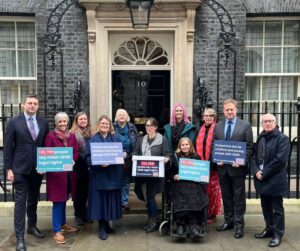
The petition was debated in the House of Commons in September last year. Over 90 MPs took part in a three-hour debate, with key messages including early intervention for children with SEND, mainstream inclusion and capacity, parental blame, and the maintenance of accountability for county councils and local authorities.
In her summing up, Georgia Gould, Minister of State for the Department for Education, said that the voices of children, young people, and their families, as well as those of teachers and supporters, must be at the forefront.
She stated that children should receive support when needed, with early intervention serving as the foundation for reform. They should also not have to go miles away from their families and communities to get the right support, so more investment in community support is needed.
A school’s white paper is expected next month, which will include the plans for reform of the SEND system. The Government insists nothing has been decided so far. It was due in the autumn of 2025, but was delayed to “ensure the most effective set of reforms”.
At the time, Education Secretary Bridget Phillipson emphasised her desire for an extended period of collaboration, stating that she aims to test the proposals with the people who matter most in these reforms—families—alongside teachers and other experts.
Since then, the Department of Education has been canvassing views from parents and schools through online and regional meetings.
It also announced that it is investing an additional £3 billion to create tens of thousands of new specialist places in mainstream schools for children with SEND.
It says the money will enable children to have an education close to home by expanding “specialist, calm learning spaces” in mainstream schools, equipped with facilities to support children with SEND, allowing children to mix with other classes for subjects or parts of the day that are appropriate for them.



