Learning Disability Today
Blue Sky Offices Shoreham
25 Cecil Pashley Way
Shoreham-by-Sea
West Sussex
BN43 5FF
United Kingdom
T: 01273 434943
Contacts
Alison Bloomer
Managing Editor
[email protected]
[email protected]

A compelling new exhibition will showcase the experiences of people with a learning disability and autistic people who have been detained in mental health hospitals, along with their families’ struggle to secure their release.
The Homes Not Hospitals: The Fight for Freedom exhibition, which will be held in Bethnal Green, London, will launch tomorrow (Friday, 13 March) and run until 19 March 2026.
It has been curated by families and campaigners, who have come together over many years, to raise awareness of the shocking and ongoing inappropriate detention of people with a learning disability and autistic people in mental health hospitals.
Many came together after the Winterbourne View scandal, and as the promised reforms failed to materialise, their numbers grew as more people were admitted through the mental health hospital system.
The exhibition features personal testimonies, photography, sound, and immersive installations. It highlights first-hand experiences from individuals and their families, the realities of detention, and the hope for life within the community.
Featured in the exhibition is 30-year-old Stephen, who has severe autism and a learning disability and who spent over seven years detained in mental health units.
His mother, Leo Andrade, said: “We were initially told it was only going to be for an assessment, and he would be out in 18 weeks. We know now that was a lie. He was trapped in a unit where staff didn’t have the right skills around supporting people with autism and learning disability and who could give my son the support he needed. They mistreated and abused my son. He had numerous broken bones and was also drugged with 8 different antipsychotics a day.
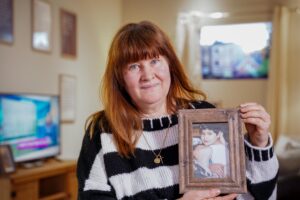
“It was heartbreaking visiting Stephen. He was so out of it – he had lost all speech and mobility and would soil and wet himself. I was totally powerless to get him out.”
Sara has also shared her family’s experience as part of the exhibition. Her son Josh, 22, has been in a mental health unit his whole adult life and even spent his 21st birthday in a seclusion room with the family being forced to pass his presents through a hatch in the door.
She adds: “We wish we’d never asked for help, it’s the biggest regret of our lives. He was taken from us and locked up and we are still waiting for him to come home. It’s easy to lock people like Josh away and just forget about them rather than get them out of there. It’s an easy life to just lock people with a learning disability away, drug them and keep them quiet.”
According to the latest data, there are currently 2,050 people with a learning disability and autistic people locked away in units. 245 of them from London. Many are there not because they need inpatient mental health treatment, but because the right support to meet their needs is not available in the community.
In these settings, there is often high use of restraint, including pinning people to the floor, chemical injections to tranquillise people, and keeping people in isolation for months on end, leaving many more traumatised than when they arrived.
Latest data shows, within one year, people with a learning disability and autistic people in mental health hospitals were subjected to over 100,000 uses of restraint, with over a third being used against children.



